 English
 繁体中文
 简体中文
 Deutsch
 Tiếng Việt

Sản phẩm
Ultrasonic Solder Pot FD-12012060C | Flux-Free Tinning Machine 120x120 mm Bath
- Product details
-
ULTRASONIC SOLDER POT · FD-12012060C (FLUX-FREE TINNING · 120 × 120 mm BATH)
The Ultrasonic Solder Pot FD-12012060C is a flux-free tinning and dip-soldering machine for magnet wire, inductor and transformer pins, and the difficult dissimilar materials that flux tinning simply cannot wet. A 20 kHz transducer drives cavitation straight into the molten solder, so the oxide film is stripped mechanically and the base metal is wetted without any flux at all. The 120 × 120 mm bath is the mid-size of the series — big enough for multi-pin batches, small enough to keep the melt and the running cost down. Also listed as an ultrasonic tinning machine, a flux-free solder pot or ultrasonic dip soldering equipment.
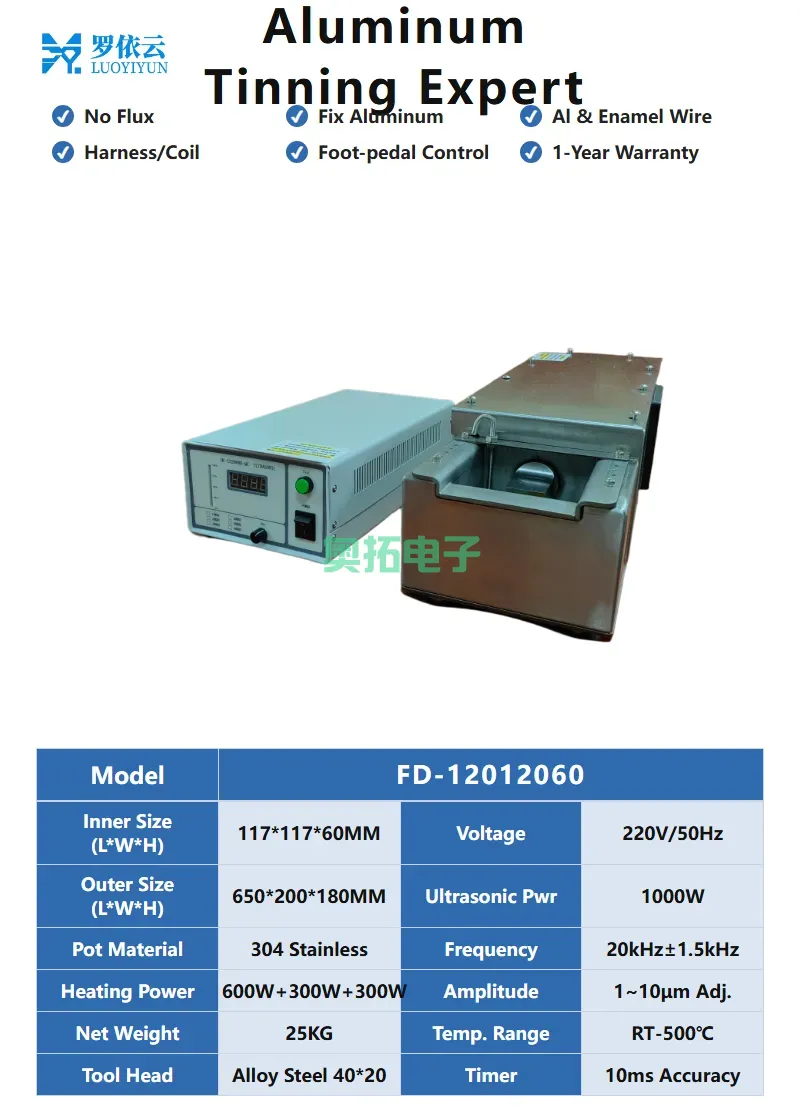
Product ParametersModel FD-12012060C — Ultrasonic Solder Pot Also Known As Ultrasonic Tinning Machine · Ultrasonic Dip Soldering Equipment · Flux-Free Solder Pot Bath size 120 × 120 mm (bath depth 60 mm per model code) Ultrasonic power 1000 W Heating power 1800 W Ultrasonic frequency 20 kHz Voltage 220 V / 50 Hz Solder capacity 16 kg Machine weight 28 kg Overall size 740 × 250 × 180 mm Pot material 304 stainless steel Horn material Titanium alloy Carton size Quoted against your order Packing quantity 1 unit per carton Rows are transcribed from the parameter fields recorded on the listing for the ultrasonic solder pot series. Rows marked "Quoted against your order" are confirmed with the quotation.
Function SetFlux-free ultrasonic tinning — 20 kHz cavitation in the molten solder strips oxide off the work piece, so the alloy wets bare copper, aluminium and enamel wire with no flux at all.
Enamel removal in one dip — polyurethane and polyester enamel on magnet wire is burned off and the copper tinned in the same pass, replacing a separate stripping step.
1000 W ultrasonic transducer — sustained cavitation energy across the 120 × 120 mm bath, strong enough for multi-pin inductor and transformer batches.
1800 W heating with digital control — the bath holds its working temperature under load, so the wetting result does not drift as parts are dipped.
Pinhole-free joints — ultrasonic agitation drives solder into micro-cracks and pores and expels trapped gas, eliminating the blowholes that flux tinning leaves behind.
Dissimilar-material joining — aluminium–copper, aluminium–glass and aluminium–ceramic connections that conventional soldering cannot make.
Product OverviewApplication Fields Features Advantages Inductor and transformer pin tinning, magnet and enamelled wire tinning, solar photovoltaic glass sealing, semiconductor and ceramic heater work, aluminium–copper busbar joining, precision component pre-tinning. 1000 W ultrasonic power, 1800 W heating, 20 kHz, 16 kg solder capacity, 120 × 120 mm bath, 304 stainless steel pot, titanium alloy horn, 220 V / 50 Hz, 28 kg. No flux, so no residue to wash off, no flux pitting and no acid waste water; one dip replaces strip + flux + clean; enables glass, ceramic and aluminium work. Ultrasonic Solder Pot Range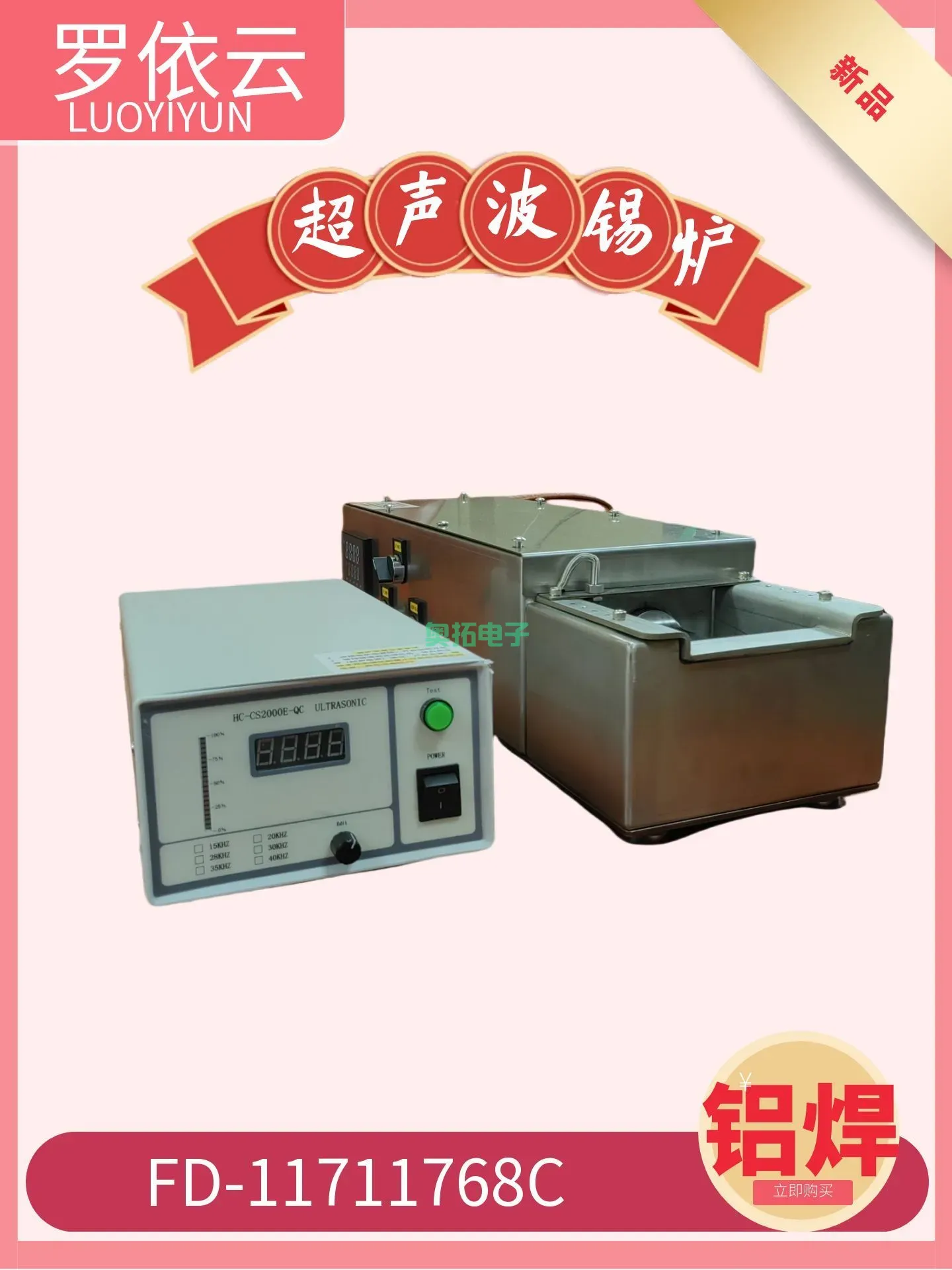
Ultrasonic Solder Pot FD-12012060C
120 × 120 mm bath, 1000 W ultrasonic, 1800 W heating, 20 kHz
Flagship mid-size model — multi-pin batch capacity
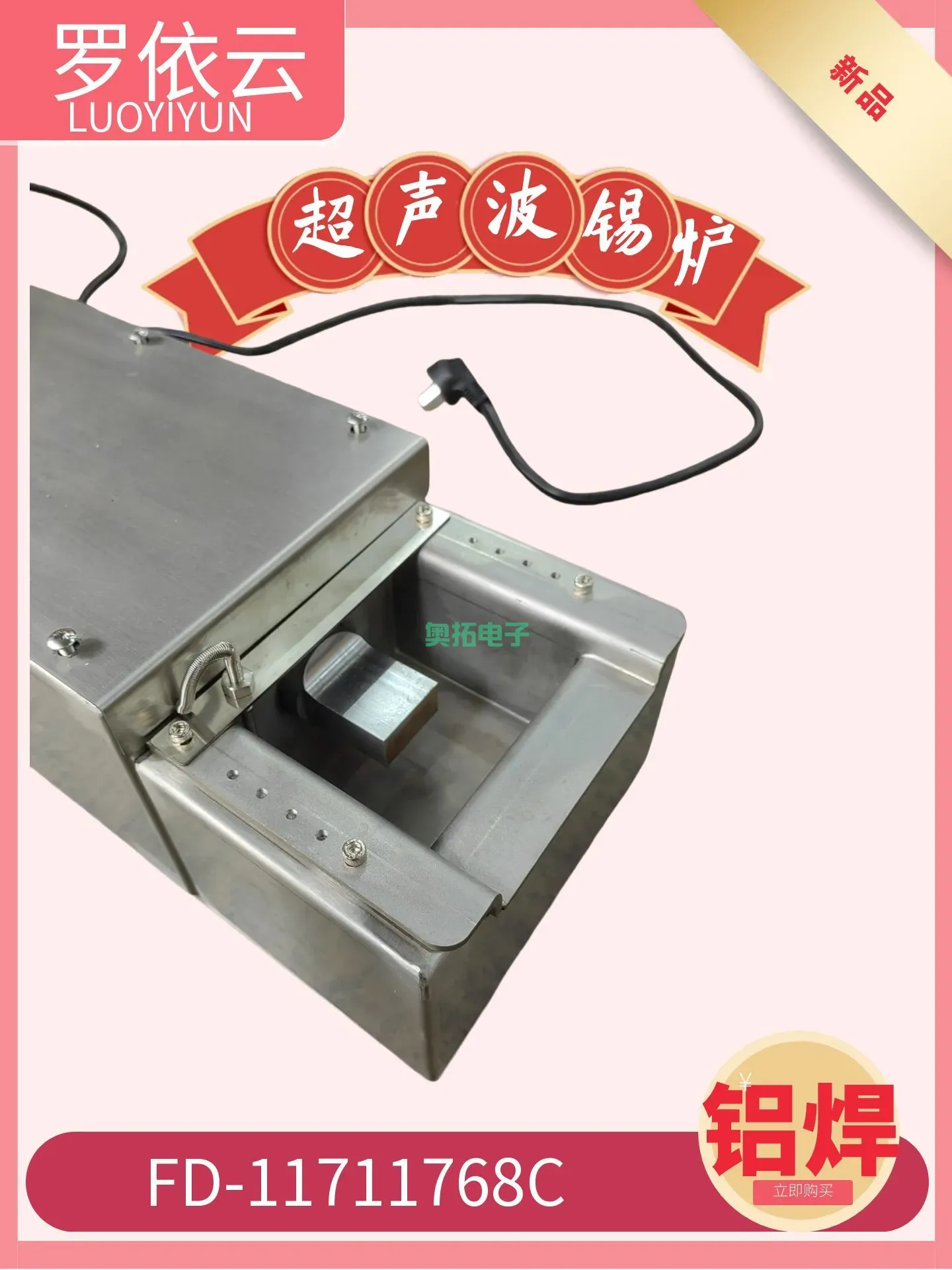
Ultrasonic Solder Pot FD-14014070C
Larger bath for bigger work pieces and longer pin rows
Same transducer platform, deeper melt
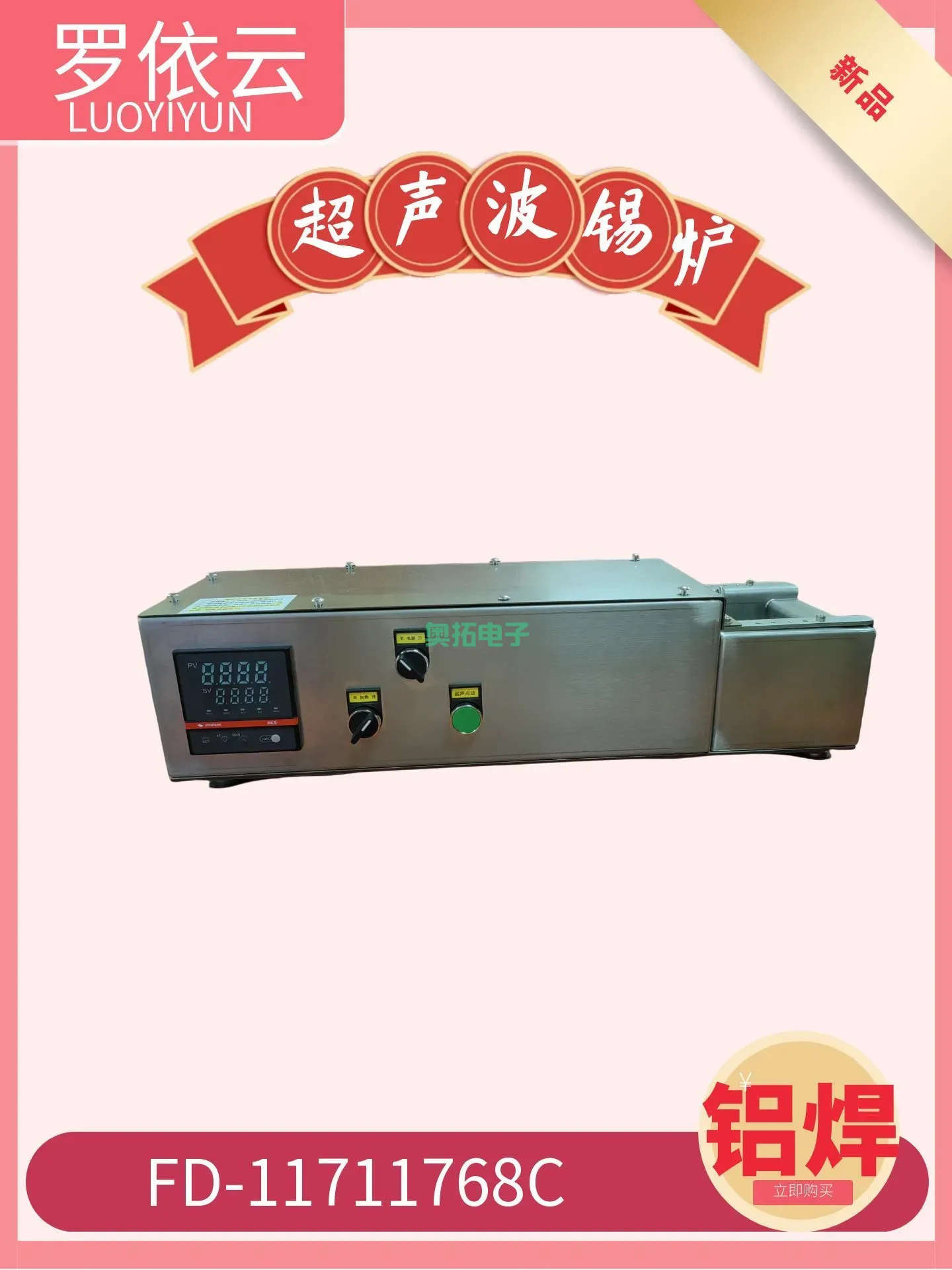
Ultrasonic Solder Pot FD-20014070C
Largest bath in the series, 200 × 140 mm
For long busbars and high-volume tinning
All three models share the same transducer platform, 304 stainless steel pot and titanium alloy horn — the model number is the bath size in millimetres.
Product Details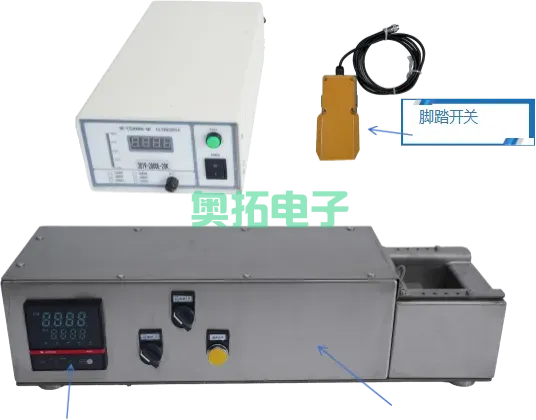
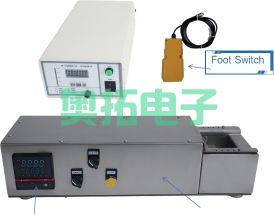
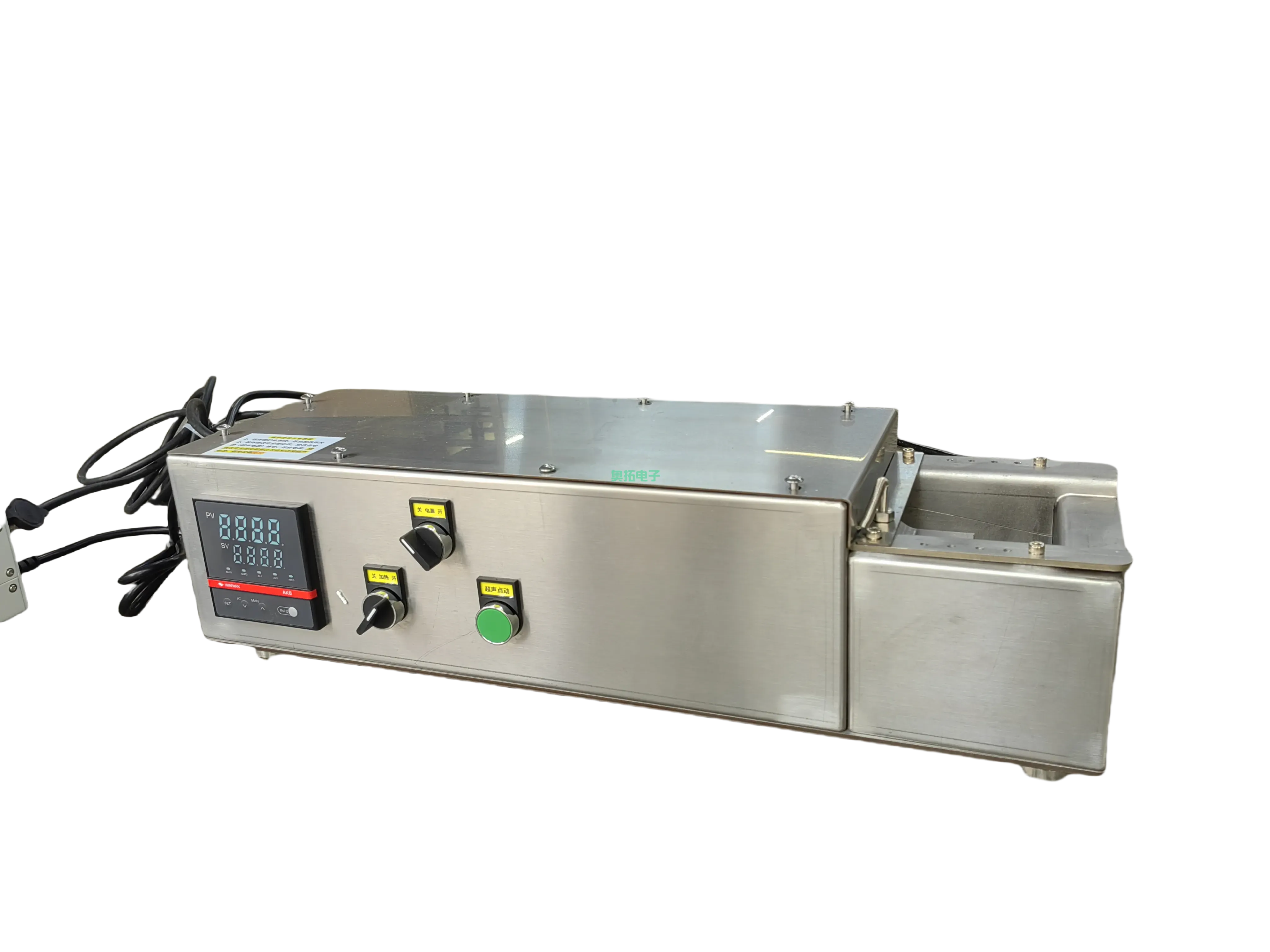
Overall view with the 120 × 120 mm bath
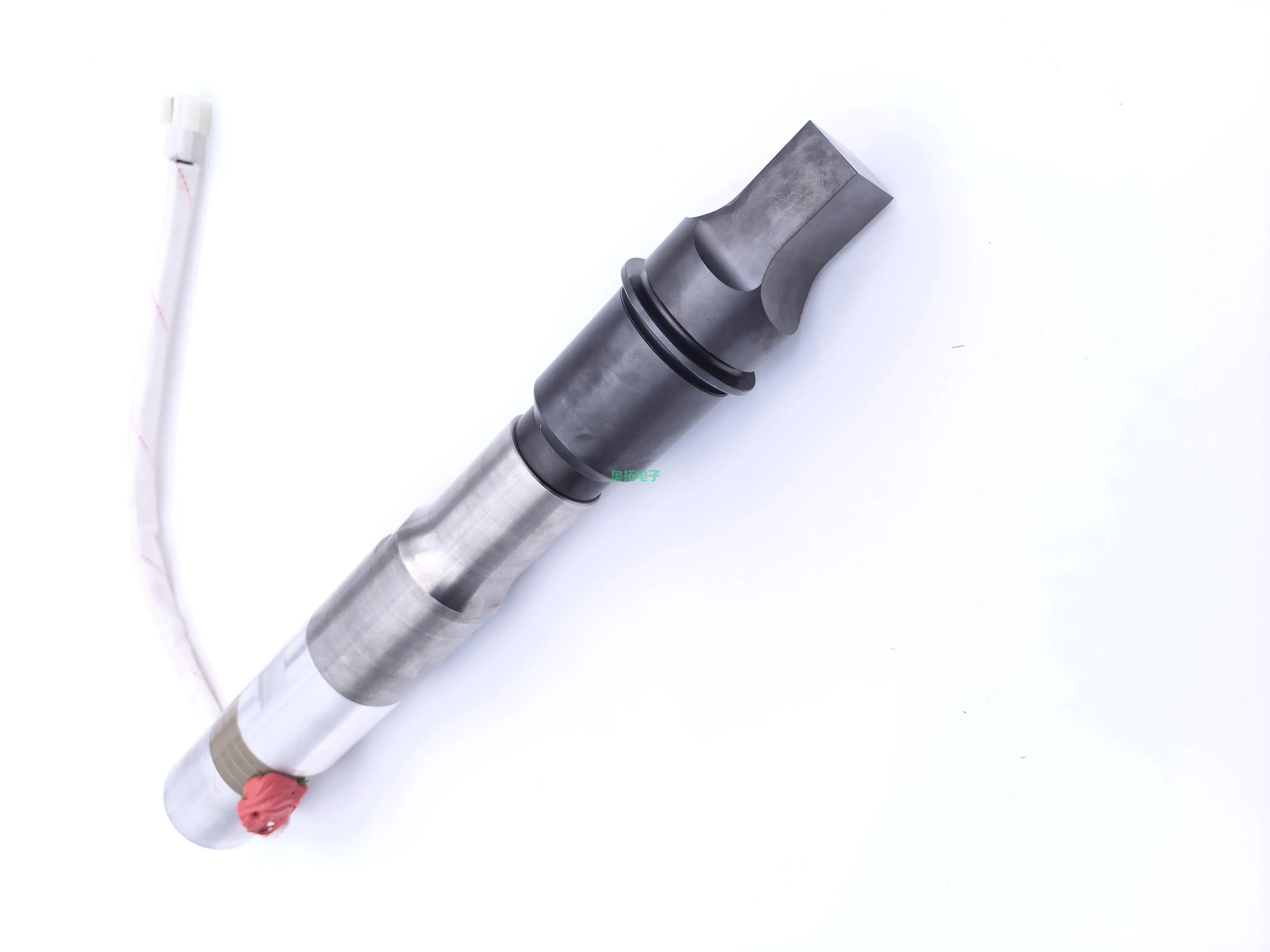
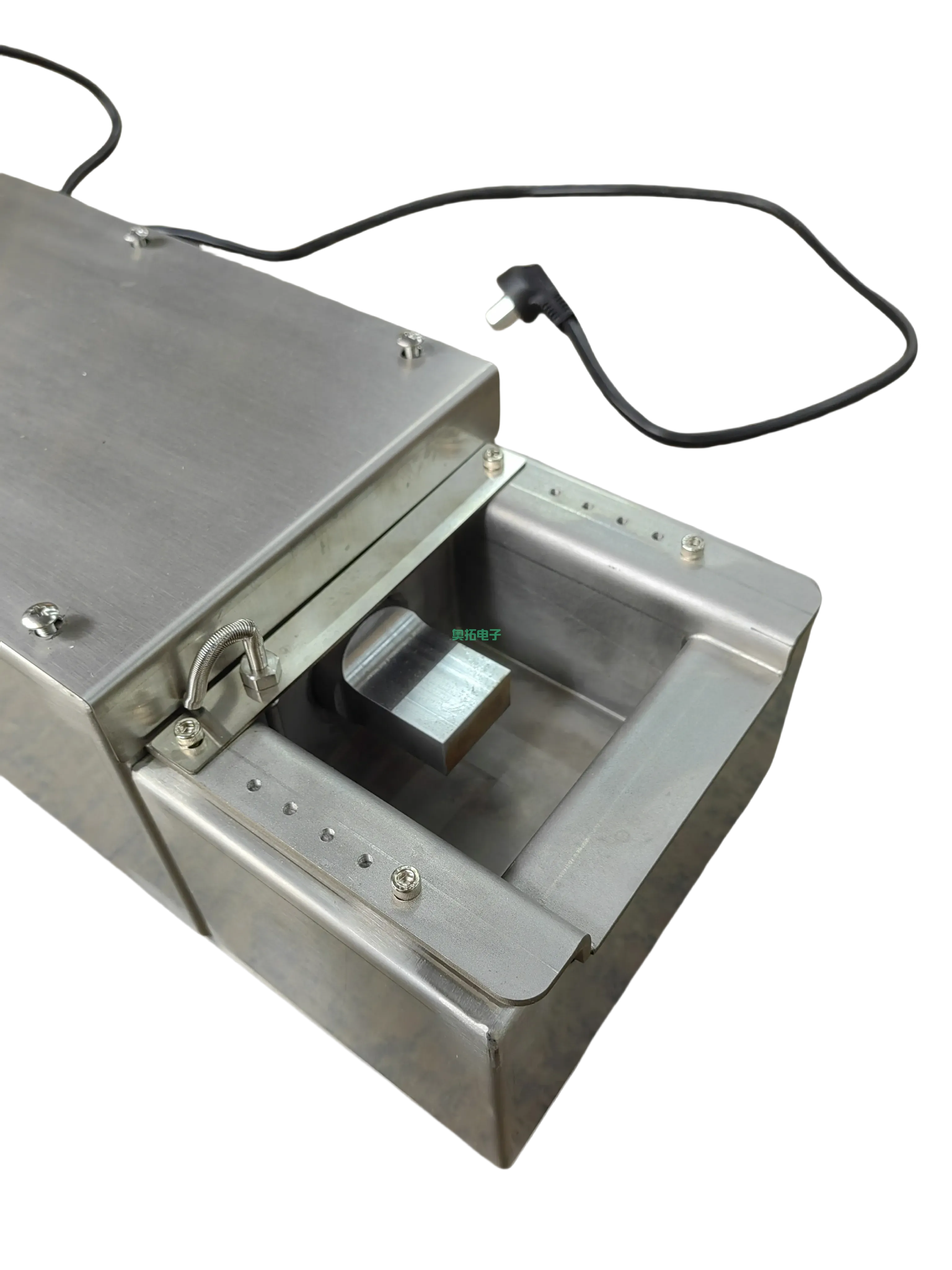
20 kHz transducer head and titanium alloy horn
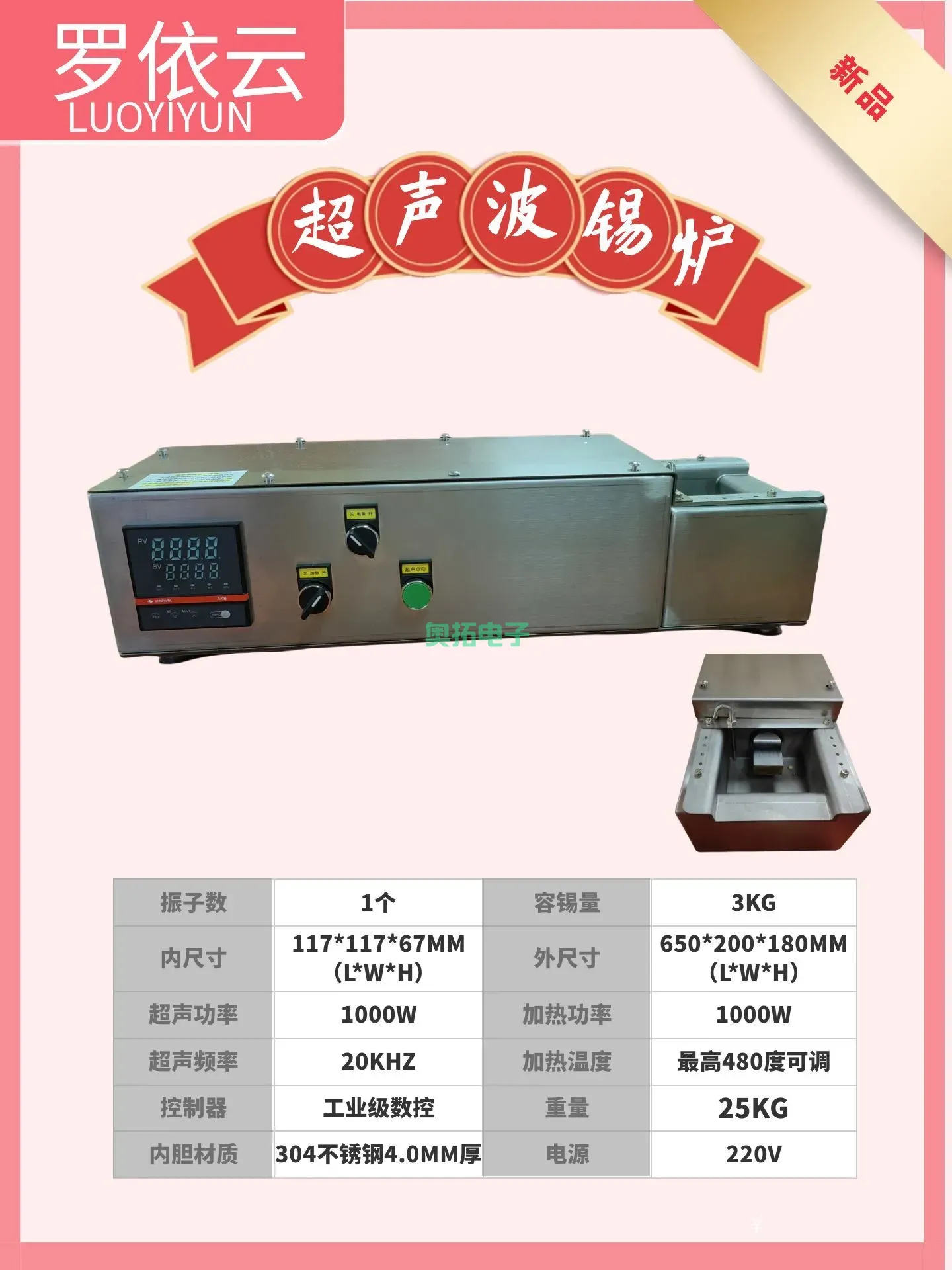
Control panel and 304 stainless steel pot body
Photographs are the current listing images for the ultrasonic solder pot series.
Product Demo Video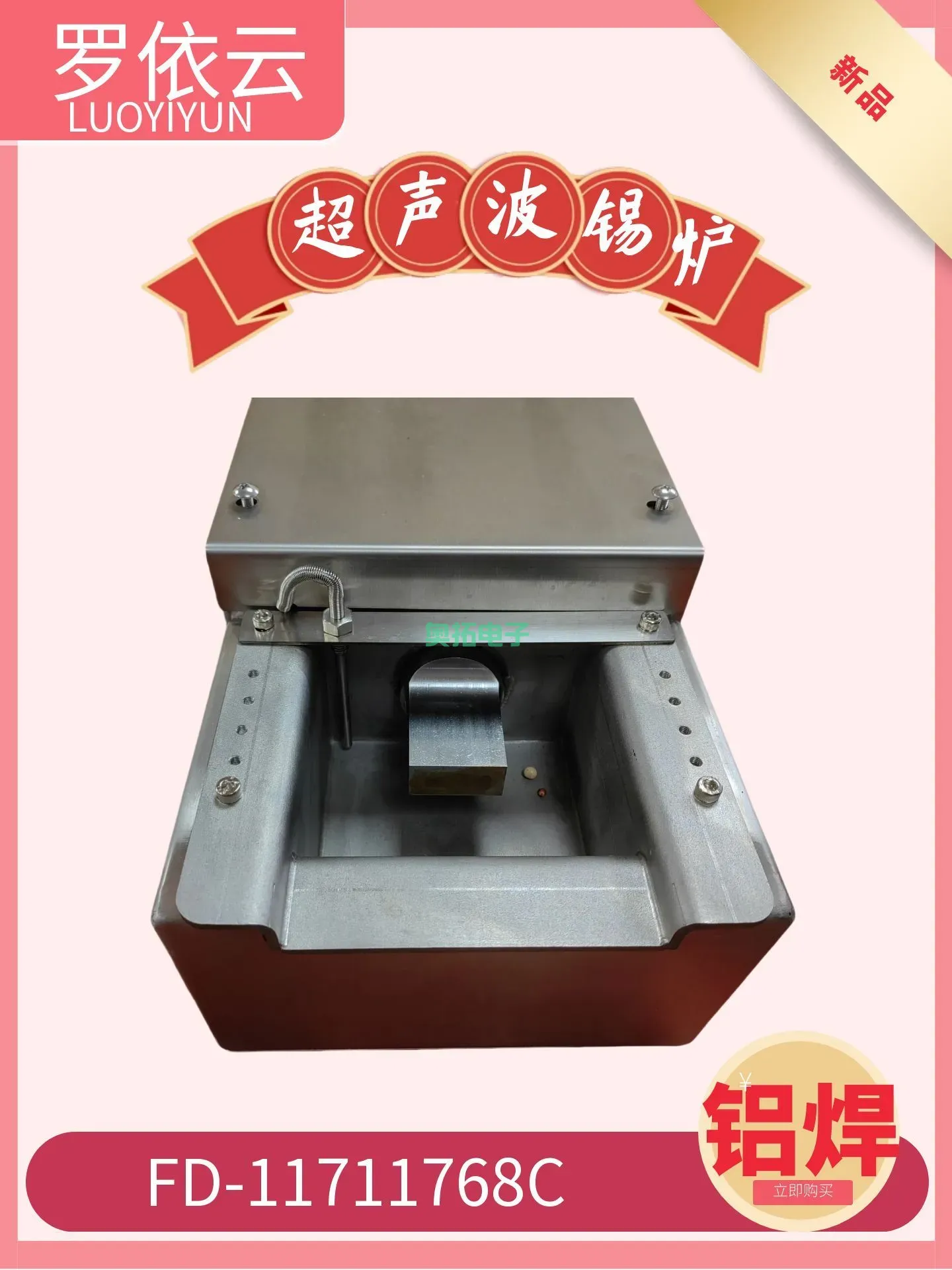
Watch the flux-free tinning process
The clip shows the transducer running in the molten bath and parts being dipped with no flux applied at any stage.
▶ Play the video
Application ScenariosMagnet wire tinning Polyurethane and polyester enamel is burned off and the copper tinned in a single dip — the 120 mm bath takes a full row of leads at once. Inductor & transformer pins Multi-pin components are pressed into the cavitating bath, so every pin is wetted in the same pass with no flux and no cleaning line. Aluminium & dissimilar metals Aluminium to copper, glass and ceramic connections that ordinary flux soldering cannot wet, and aluminium-for-copper substitution where it cuts material cost. Glass & ceramic sealing Solar photovoltaic glass sealing and ceramic heater terminals, where oxide films defeat conventional soldering entirely. How To UseSettle the machine on a level bench, connect the 220 V / 50 Hz supply, and charge the 304 stainless steel pot with up to 16 kg of solder.
Switch on the 1800 W heating and let the bath reach the working temperature for your alloy — around 250–270 °C for lead-free SAC solder.
Start the 1000 W ultrasonic transducer and let the cavitation settle across the 120 × 120 mm bath.
Dip the work piece — no flux is applied at any stage. Hold it in the cavitating zone long enough for the oxide to be stripped and the alloy to wet.
Withdraw slowly, let the joint cool, and inspect — a flux-free joint shows no residue and needs no cleaning step.
Between batches, skim the bath surface and top up the solder; at the end of the shift switch off the transducer first, then the heater.
Safety note: molten solder at 250–400 °C causes severe burns. Wear heat-resistant gloves and a face shield, keep water and damp parts away from the bath entirely, work under extraction, and never start the transducer before it is submerged in the melt.
FAQQ1: What is an ultrasonic solder pot used for?
A: Flux-free tinning and dip soldering. The 20 kHz transducer creates cavitation in the molten solder that mechanically strips the oxide layer, so magnet wire, inductor and transformer pins, aluminium, glass and ceramic can be wetted — jobs conventional flux tinning cannot do.
Q2: Do I still need flux or a cleaning line?
A: No. Ultrasonic cavitation removes the oxide film physically, so no flux is required — and that means no flux residue to wash off, no flux pitting on the joint, no acid waste water and no consumable flux cost.
Q3: Can it remove enamel from magnet wire?
A: Yes. Polyurethane and polyester enamel on magnet wire is burned off and the copper tinned in the same dip, so a separate stripping step is no longer needed.
Q4: Which model size should I choose?
A: The number in the model is the bath size in millimetres. FD-12012060C has a 120 × 120 mm bath; the series also includes FD-14014070C and FD-20014070C. Bigger baths suit bigger work pieces and hold more solder — tell us your part size and batch quantity and we will size it for you.
Q5: What materials can be joined?
A: Aluminium to copper, aluminium to glass, aluminium to ceramic, and enamelled or oxidised copper — combinations conventional flux soldering cannot wet. The process also suits inductor and transformer pins, busbars and precision pre-tinning.
Q6: How do I get a price and lead time?
A: Send us your work piece size and material, the solder alloy, the required bath size and your supply voltage. Carton size and the final configuration are quoted against your exact order, so our sales engineer confirms them together with the price and lead time.
Need a quotation for the Ultrasonic Solder Pot FD-12012060C?
Send us your work piece size and solder alloy — we confirm the bath size, voltage and lead time with the quotation.
Get a Quote
related products
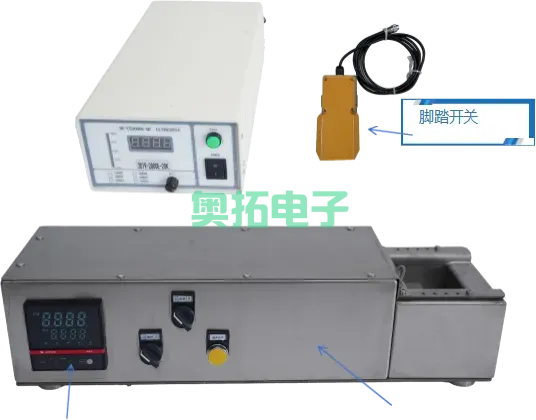
Ultrasonic Solder Pot FD-20014070C | Flux-Free Tinning Machine 200x140 mm Bath
Ultrasonic solder pot FD-20014070C, 200x...
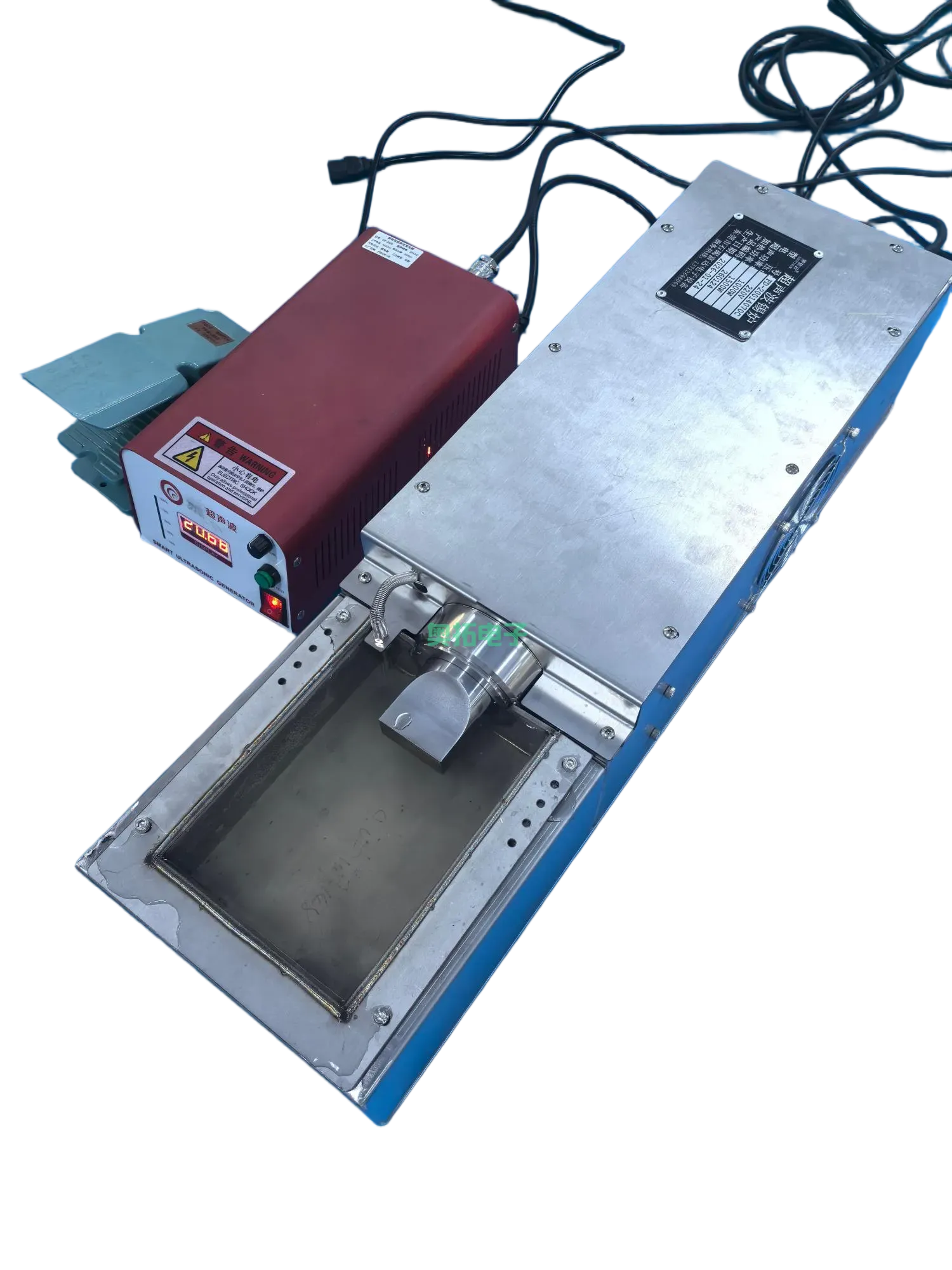
Ultrasonic Solder Pot FD-14014070C | Flux-Free Tinning Machine 140x140 mm Bath
Ultrasonic solder pot FD-14014070C, 140x...
Ultrasonic Solder Pot FD-12012060C | Flux-Free Tinning Machine 120x120 mm Bath
Ultrasonic solder pot FD-12012060C, 120x...
Stainless Steel Explosion-Proof Industrial Oven FD1200800800FBB
Stainless Steel Explosion-Proof Industri...
Yêu cầu sản phẩm
Vui lòng để lại tin nhắn của bạn, chúng tôi sẽ liên hệ với bạn nhanh chóng sau khi nhận được nó, cảm ơn bạn đã hỗ trợ của bạn!
common problem
Q
What are the characteristics of cigarette box three-dimensional packaging machine?
A
1. There is no need to adjust the height of the countertops on both sides of the machine when changing the mold, and there is no need to disassemble and assemble the discharge chain or put the hopper, which shortens the four-hour mold replacement time of the traditional machine to only 30 minutes.
2. Adopting a new dual insurance mechanism, the machine does not need to be shut down when it is not running synchronously, nor will it damage other parts.
3. The original one-way hand crank device prevents the machine from shaking in reverse, and the handwheel does not rotate during operation, making the operator safer.
4. The new double rotary film cutting knife can ensure that the machine can be used continuously for many years without a sharpening port, overcoming the defect that the traditional fixed single rotary film cutting blade is easy to wear.
Q
Automatic poker transparent film three-dimensional packaging machine packaging products?
A
Automatic poker transparent film three-dimensional packaging machine is mainly suitable for bulk poker, compressed biscuits, sachima, stickers, sticky notes, wafer biscuits and other bulk or multi-object collection of three-dimensional packaging.
Địa chỉ email:
Đường dây nóng:


